08 October, 2026
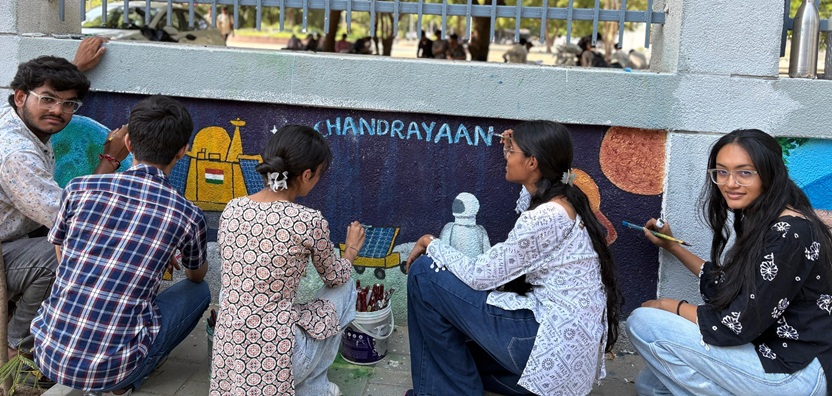
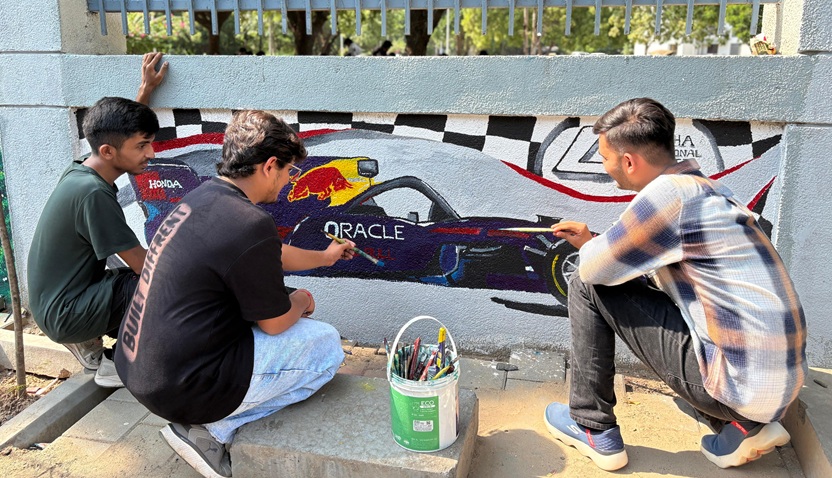
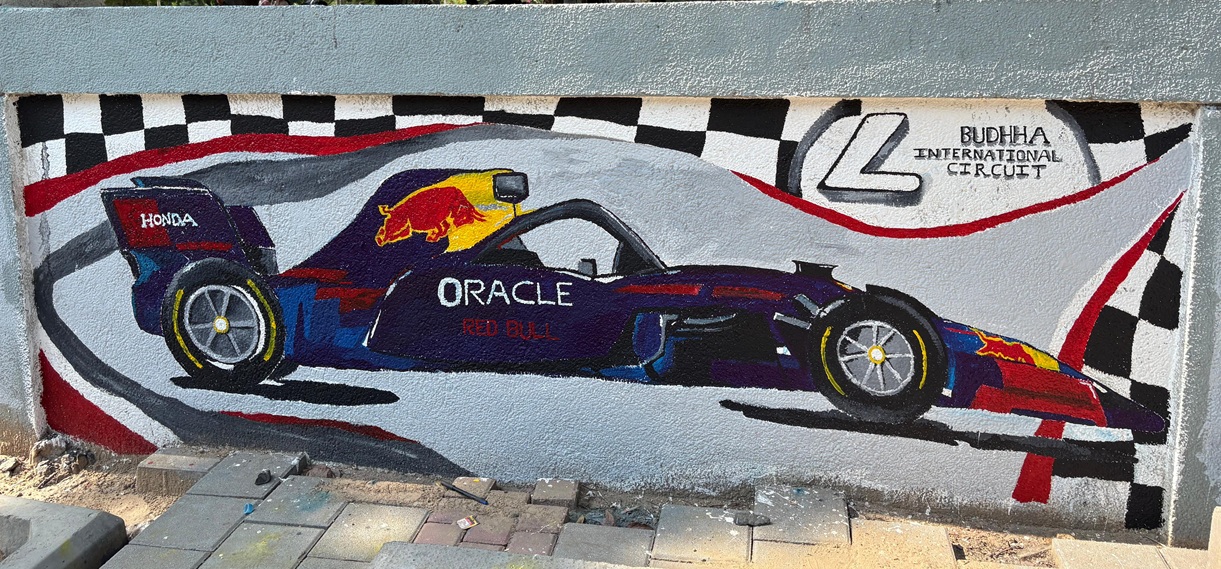
Ahmedabad, 8 October: What if India’s engineering achievements could be seen not on a blueprint or a presentation screen, but across the walls of an engineering college? At Vishwakarma Government Engineering College (VGEC), Chandkheda, students turned this idea into reality by transforming campus walls into large-scale visual stories of India’s engineering and technological future. Bridges, bullet trains, semiconductor technology and future infrastructure were brought to life through art under the theme “Bharat - Engineering the Future.” Students from different engineering branches brought these ideas to life through detailed paintings, transforming complex engineering concepts into visual stories that stood out across the campus. The initiative, conducted under the guidance of Principal Dr. V. S. Purani, brought together engineering concepts and visual creativity in a distinctive campus-wide display.
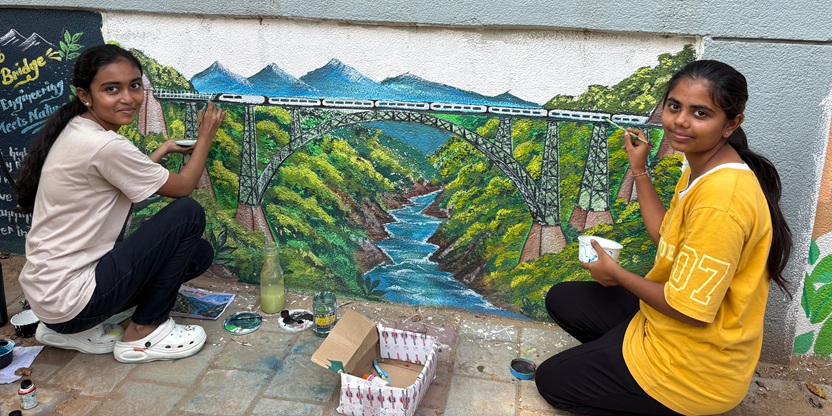
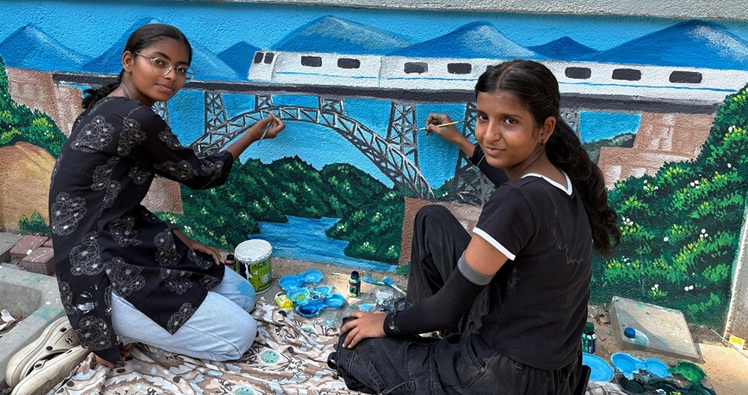
The artworks featured a diverse set of subjects drawn from India’s ongoing infrastructure and technology developments. Among the themes selected by students were the Chenab Railway Bridge, Bullet Train, New Pamban Bridge, Vande Bharat, Ahmedabad-Dholera, semiconductors and advanced manufacturing, along with emerging technologies. Each subject offered a different perspective on the country’s changing technological landscape, from major transport projects and improved connectivity to new areas of manufacturing and technology. Together, the paintings presented engineering as a field that extends beyond machines and structures, reflecting its growing role in shaping how people travel, connect, manufacture and live.
Turning these subjects into wall art, however, required more than simply reproducing familiar images. Students had to consider how a complex engineering idea could be communicated through a visual composition without relying on equations, technical drawings or lengthy explanations. A bridge could be presented as a symbol of connectivity and engineering capability, a high-speed train as an example of changing mobility, while semiconductors could introduce viewers to an industry that plays a central role in modern technology but remains largely invisible in everyday life.
The activity brought an often less visible side of engineering students into the public eye. Academic work generally measures technical understanding through examinations, laboratory work, assignments and projects, while a large wall requires a different combination of creative thinking, observation, spatial planning, design and communication. Students had to work with the scale of the wall, organise visual elements effectively and ensure that their ideas remained understandable from a distance.
The wider relevance of the activity came from the subjects themselves. Major bridges, high-speed rail, emerging industrial corridors, semiconductor manufacturing and advanced technologies are increasingly part of public discussions about India’s infrastructure and technological development. By translating these subjects into artwork, students gave visual form to topics that people generally encounter through news reports, technical articles and public announcements.
The paintings also changed the way the campus environment was experienced. Walls that would normally remain part of the background became visible points of interest for students, faculty and visitors, allowing engineering subjects to be encountered through images rather than conventional academic material. The college provided the painting materials, while the competition recognised the top three entries with prizes of ₹3,000, ₹2,000 and ₹1,000, respectively. Certificates were also provided to participants.
More than the competition results, the activity offered a different way of presenting engineering to a wider audience. Students who normally work with circuits, machines, calculations and technical projects used colour, scale and visual storytelling to communicate ideas connected with India’s technological development. In doing so, the campus walls became more than decorated surfaces, they became a public-facing space where engineering ideas could be seen, interpreted and discussed outside the classroom.