21 August, 2026
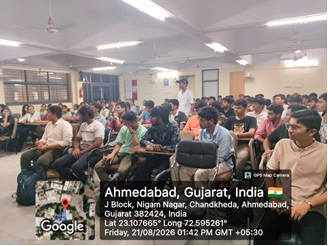
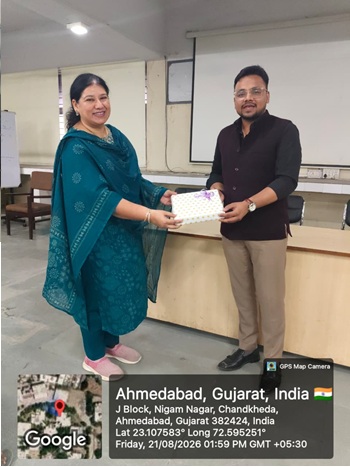
On 21 August 2026, the E-Cell of Vishwakarma Government Engineering College (VGEC), Chandkheda organized an inspiring expert session titled “Design Thinking to Startup – The Journey from Problem Identification to Entrepreneurship.” The session was delivered by Dr. Jay Dhruv, an accomplished academic leader, education strategist, institution builder, researcher, and innovator.
The session focused on helping students identify real-world, need-based problems, apply design thinking to develop innovative solutions, and transform those solutions into viable startup opportunities. Dr. Dhruv also guided students on exploring startup opportunities and understanding the role of incubators and accelerators in supporting early-stage ventures.
The expert further discussed the practical aspects of building a college-level startup, including finance, digital marketing, digital transformation, policy navigation, global orientation, and ecosystem collaboration. He emphasized that thinking beyond the local market, adopting digital tools, and engaging with mentors and industry partners can strengthen a startup’s chances of success. The session motivated students to think innovatively and consider entrepreneurship as a pathway towards building a self-reliant Bharat.
Key Features:
Discussion Points:
Outcome / Impact:
The session enhanced students’ understanding of the journey from problem identification to entrepreneurship and encouraged them to approach real-world problems through structured design thinking. It also motivated students to explore startup opportunities, seek incubation and mentoring support, and develop their entrepreneurial potential.