31 July, 2026
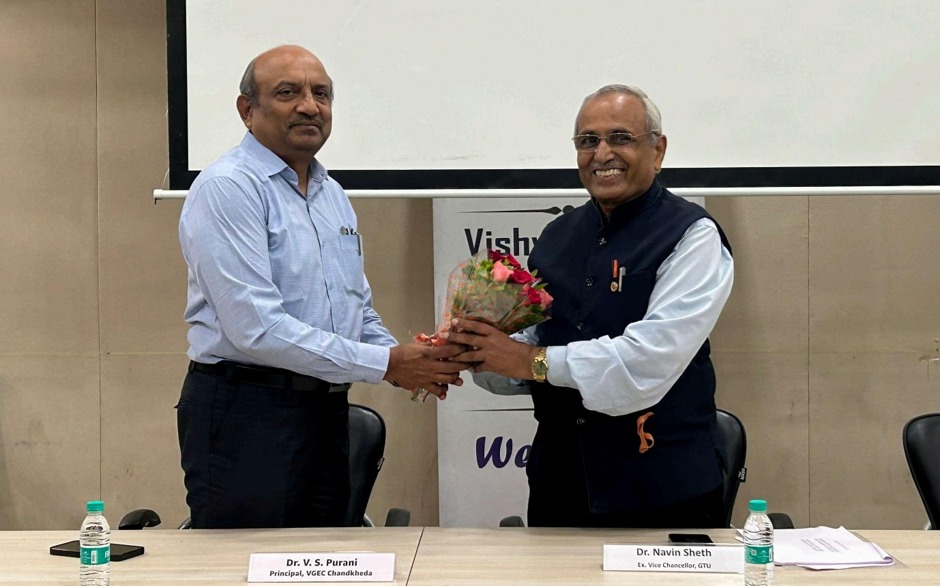
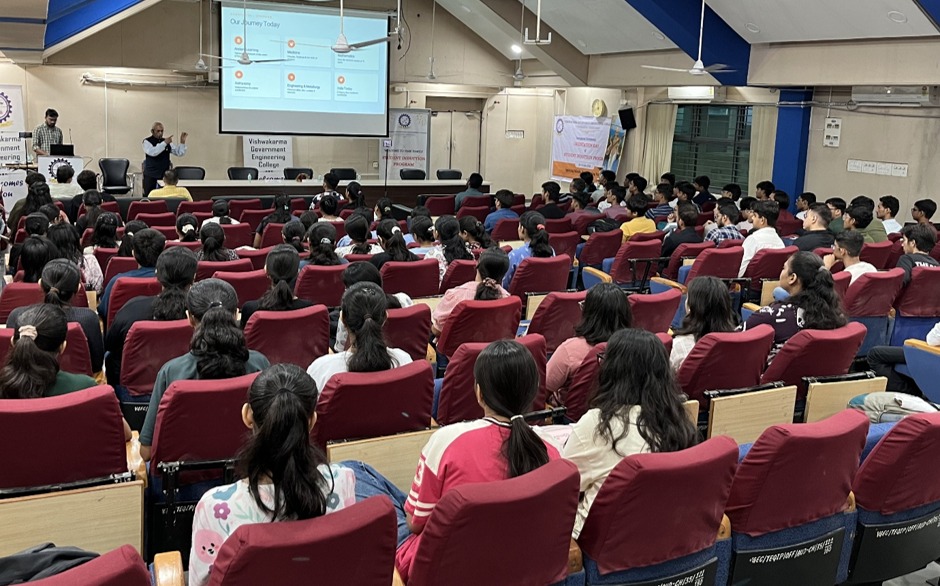
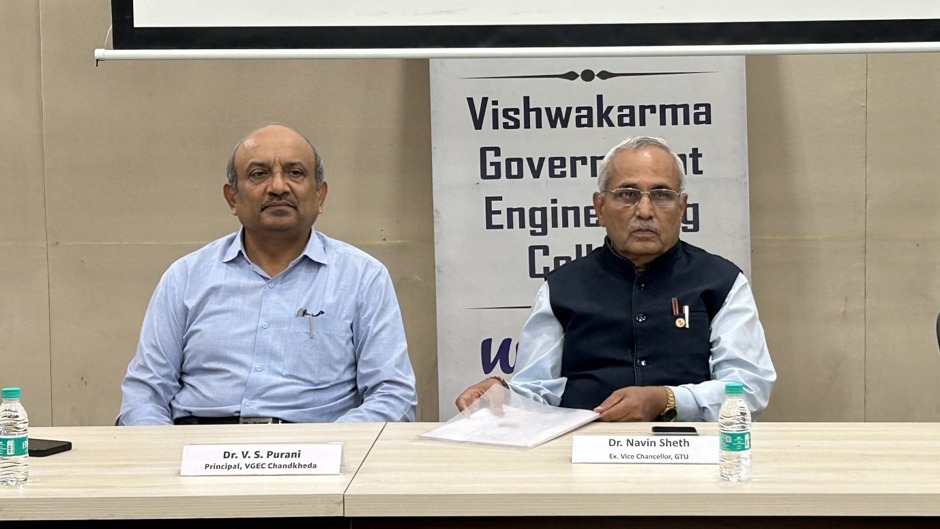
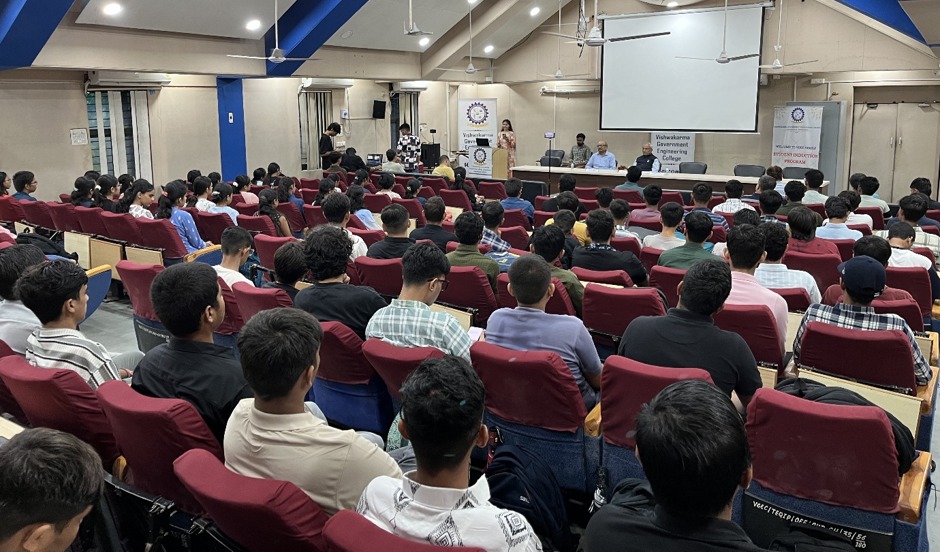
The Indian Knowledge System (IKS) is a collective body of indigenous wisdom, philosophy, science, and practical traditions developed over thousands of years across the Indian subcontinent. Officially promoted by the Indian Knowledge Systems Division under the Ministry of Education, it spans diverse fields like mathematics, medicine, and the arts. As India continues to strengthen its position as a global leader in science and technology, the responsibility of carrying this legacy forward now rests with the next generation of engineers. Reinforcing this vision, Principal Dr. V. S. Purani encouraged students to view engineering not merely as a profession but as a means of nation-building, emphasising that every great innovation begins with a curious and responsible mind. With this inspiration, the Vishwakarma Government Engineering College (VGEC), Chandkheda, organised an expert lecture on "India's Contribution in Science and Technology: From Ancient Wisdom to Modern Innovation – A Legacy That Shapes the Future" under the Student Induction Programme–2026. The session was delivered by Dr. Navin Sheth, former Vice Chancellor of Gujarat Technological University (GTU).
Addressing engineering students, Dr. Sheth traced India's remarkable scientific journey—from the invention of Zero, pioneering achievements in mathematics, astronomy and metallurgy, to modern milestones such as Chandrayaan, satellite technology and engineering innovation. He emphasised that India's scientific heritage should not remain a source of pride alone, but should inspire young engineers to create the country's next breakthrough.
Highlighting the four pillars of Knowledge, Values, Innovation and Nation Building, Dr. Sheth urged students to look beyond examinations and degrees, and instead develop the mindset of researchers, innovators and responsible problem-solvers. He emphasised that engineering education is not only about mastering technology but about using knowledge to solve real societal challenges and contribute to national progress. Drawing a connection between India's rich scientific heritage and its modern technological achievements, he encouraged students to see themselves as the next generation of innovators capable of taking India to even greater heights in science, engineering and global technological leadership.
The lecture concluded with an inspiring call to action, reminding students that India's journey of scientific excellence did not end with the discovery of Zero or the success of Chandrayaan. Instead, these milestones are stepping stones for the next generation to build upon. The session left students with a renewed sense of pride, purpose and responsibility, reinforcing the belief that the nation's greatest discoveries may still lie ahead—and that they could emerge from the curiosity, innovation and determination nurtured in today's engineering classrooms.