14 August, 2026
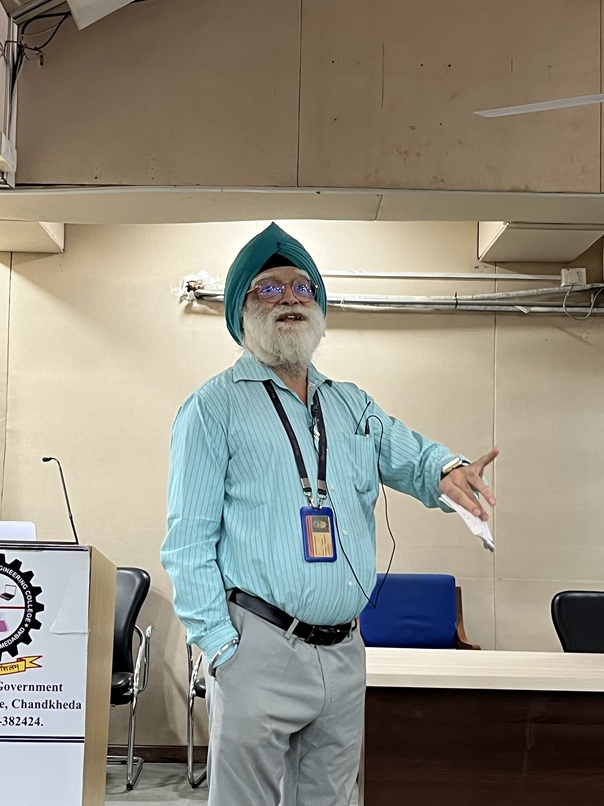
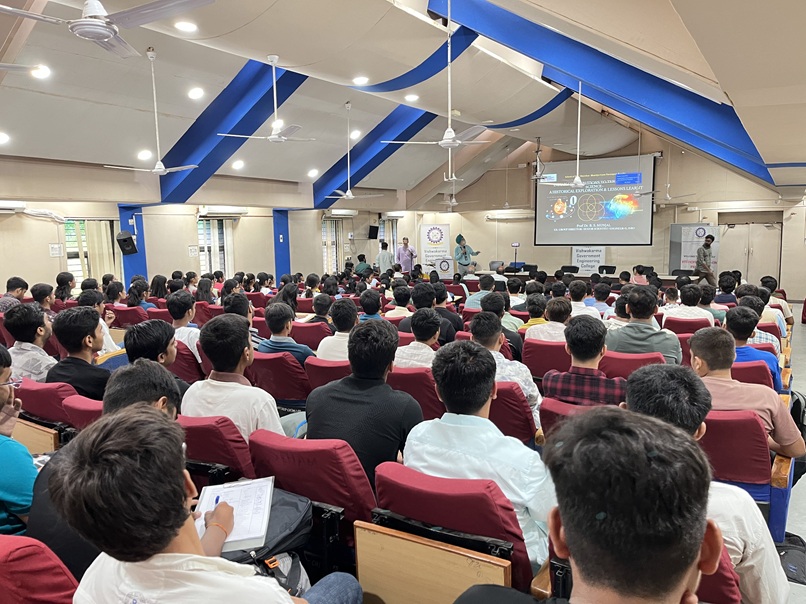
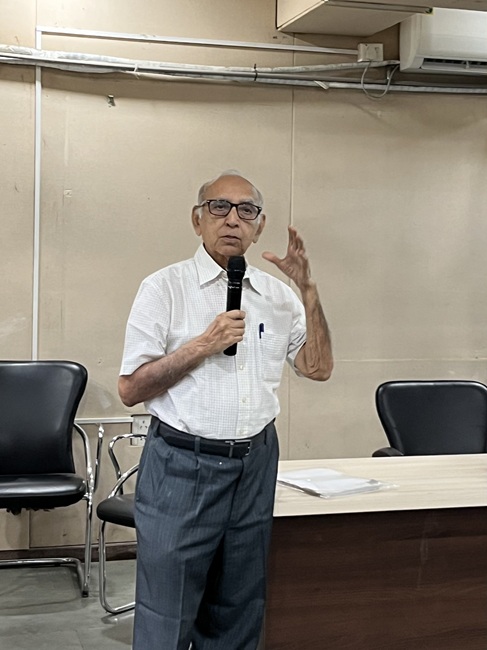
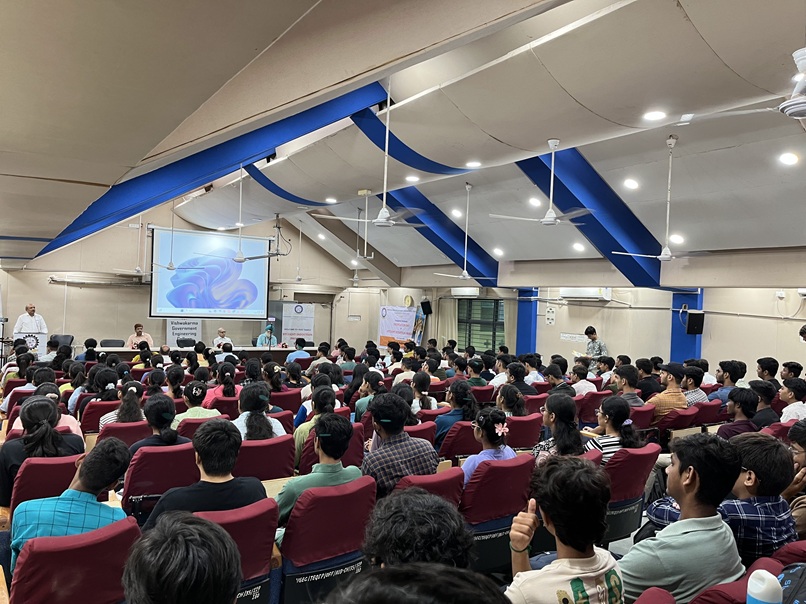
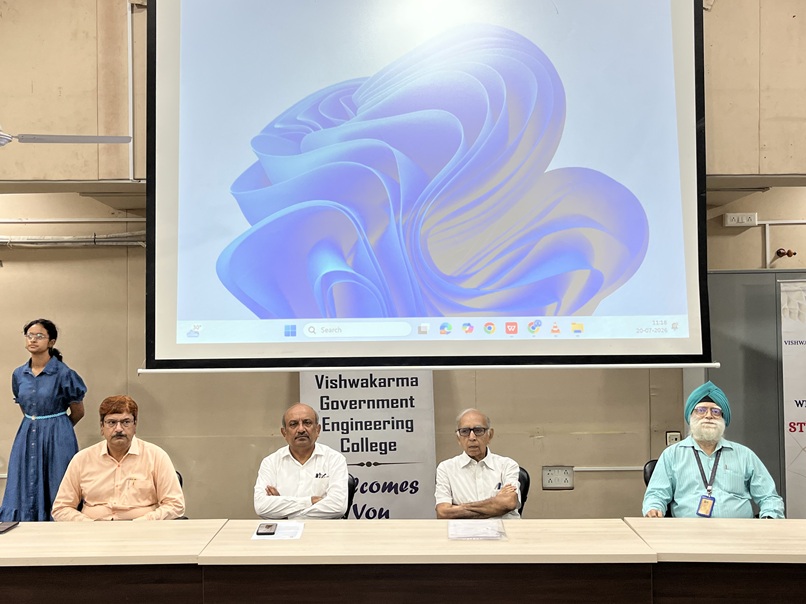
VGEC Chandkheda always invite the leader of education to their campus to give life lesson to the students of engineering along with their regular studies. Eminent speaker from the education field and ISRO were remain present in the expert lecture to motivate and inspire the student.
Dr. V. S. Purani, Principal, VGEC Chandkheda said that “In engineering management, the learning triangle (often called the Iron Triangle or Project Management Triangle) teaches that you can only balance three core constraints: Cost (cheap), Time (fast), and Scope/Quality (good)—the golden rule is that you can only ever pick two. Every single minutes you will be able learn new thing. To become only scholar is less important than learn from every experience.”
Speakers:
1. Dr. H. V. Trivedi, Retired Professor, Government Engineering College
2. Dr. B. S. Munjal , Space Scientist / Engineer-G, Former Group Director – SAC-ISRO
PhD Academician | Co-Principal Investigator – Nirma University Advisor – CISK-GTU | Author | Public Speaker, Featured in Marquis Who's Who | Chartered Engineer
🚀 Dr. Munjal will speak on the Ethics, professionalism, graduates attributes etc.
1. Deconstructing the Self-Defeating Belief
Self-Defeating Belief: "My unhappiness is caused by things that are outside of my control, so there is little I can do to feel any better." This mind-set stems from an external locus of control, where an individual attributes their emotional state entirely to external circumstances—such as workplace stress, difficult colleagues, or unexpected disruptions. |
2. The Shift to Rational Belief
Rational Belief "Many external factors are outside my control. Nevertheless, it is my thoughts (not the external) that cause my feelings. And I can learn to control my thoughts." The authors shift the focus from external dependency to internal agency. Grounded in cognitive-behavioural principles and Rational Emotive Behaviour Therapy (REBT), this paradigm recognizes a fundamental distinction between an external event and one's internal reaction to it. |
3. Core Principles of Emotional Intelligence Applied
EQ stands for Emotional Quotient, or emotional intelligence. It is the ability to understand, use, and manage your own emotions in positive ways. It also helps you understand and connect with the feelings of other people. Feldman and Mulle emphasize that Emotional Intelligence (EQ) is not about suppressing feelings, but managing them intelligently:
| Feature | IQ (Intelligence Quotient) | EQ (Emotional Quotient) |
| Definition | Measure of logical reasoning and cognitive ability. | Measure of emotional awareness and social skills. |
| Core Focus | Problem-solving, memory, and spatial/math skills. | Empathy, self-control, and reading others. |
| Nature vs. Nurture | Mostly fixed; determined largely at birth. | Flexible; can be learned and improved over time. |
| Key Indicator | Academic success and technical expertise. | Leadership, teamwork, and real-life success. |
| Evaluation | Standardized intelligence tests. | Behavioral assessments and feedback. |
4. Workplace & Practical Significance
Adopting rational beliefs produces tangible benefits in personal and professional settings:
Conclusion
Mastering emotional intelligence requires shifting from reactive victimhood to intentional agency. As Feldman and Mulle highlight, while we cannot control every circumstance at work or in life, we retain full power over how we process and respond to those circumstances through conscious cognitive control.