22 April, 2026
Germany is set to witness a significant retirement wave by 2029, with 50 lakh people retiring, creating a massive demand for skilled professionals. This is a golden chance to settle with your family in Germany and explore abundant job opportunities! – Sagar Patel
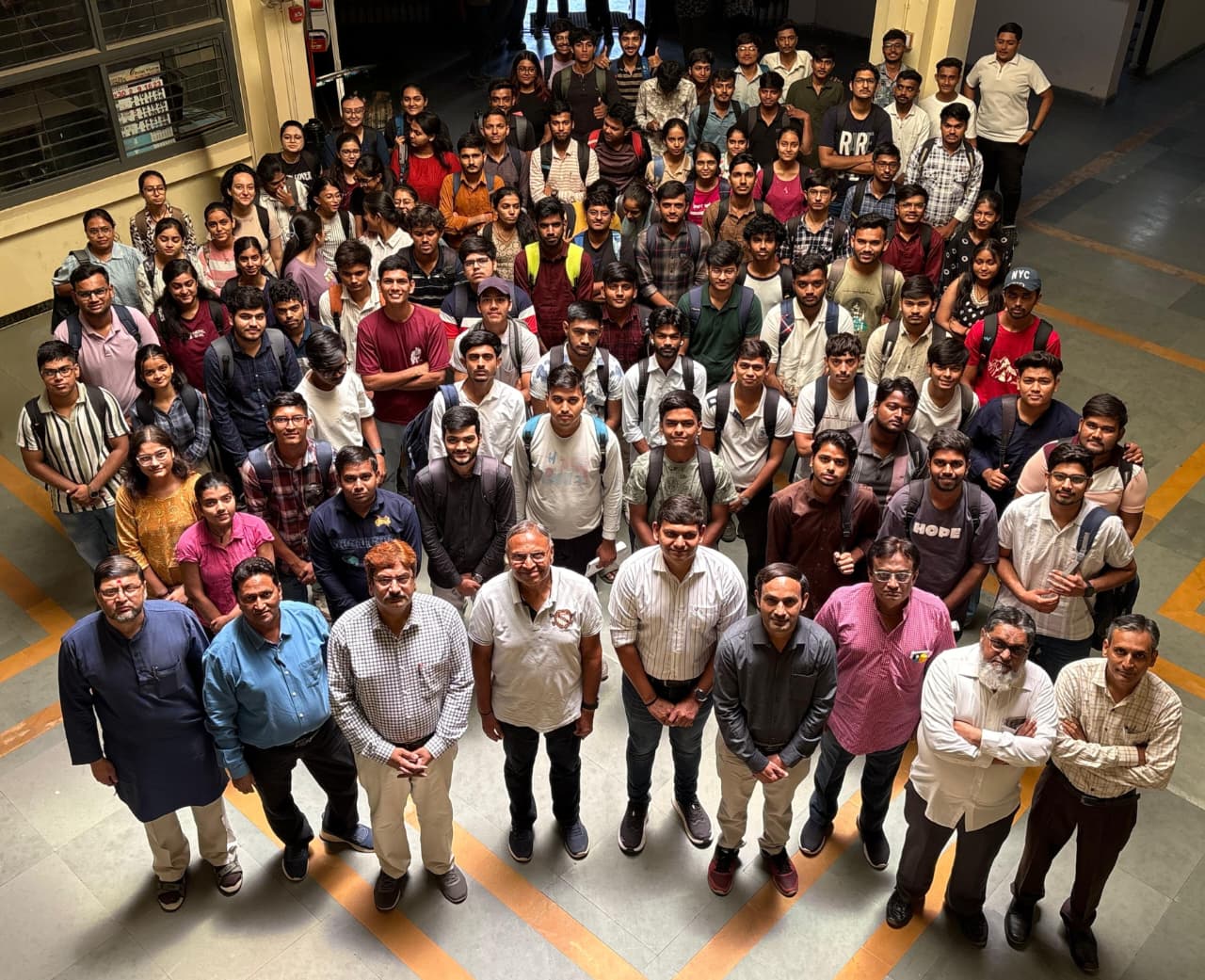
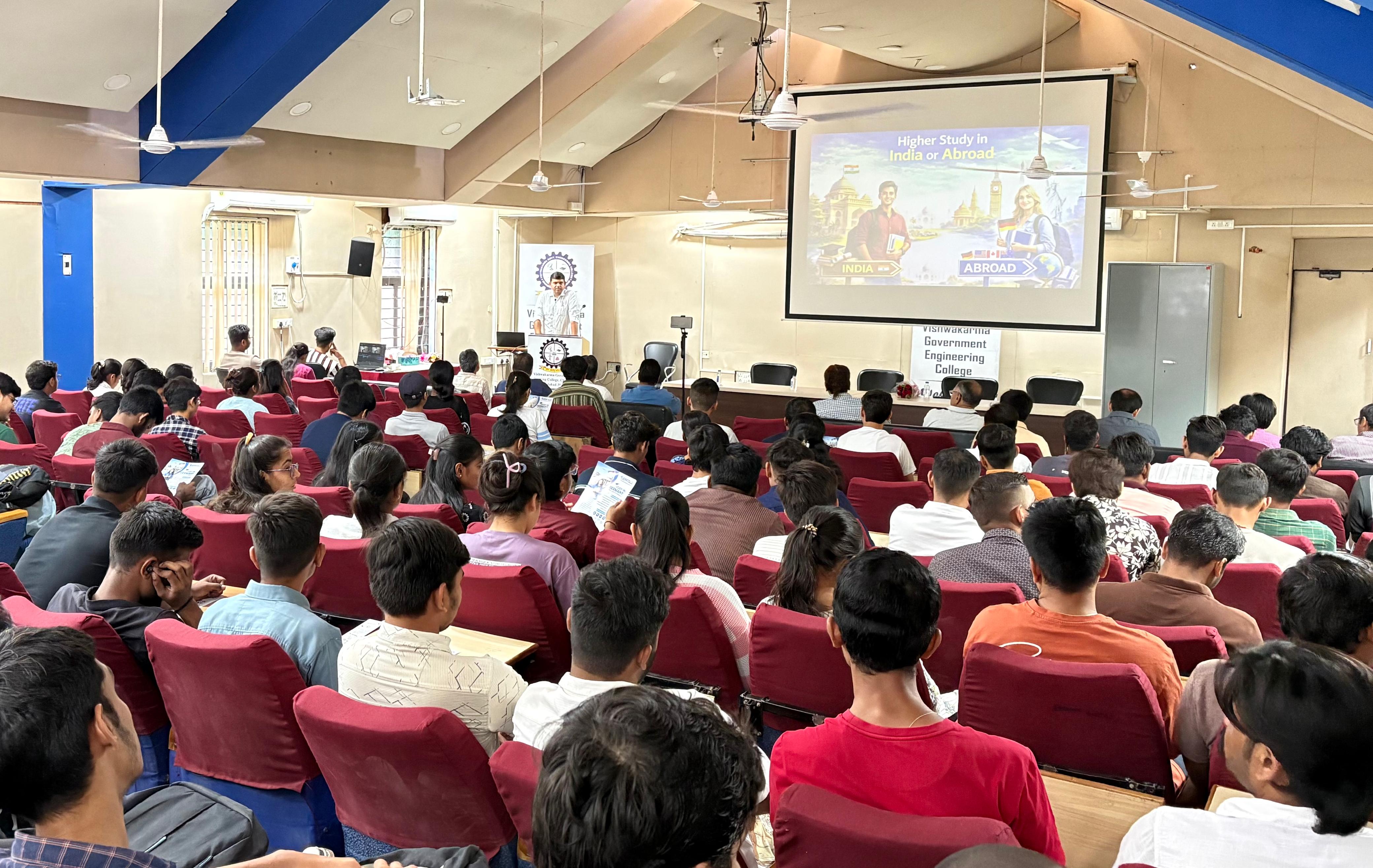
At a time when thousands of engineering students in India remain uncertain about their future despite earning degrees, a compelling perspective is beginning to reshape career thinking, look beyond boundaries. Highlighting this shift, Power Electronics department of Vishwakarma Government Engineering College (VGEC), Chandkheda, Ahmedabad, hosted an expert session that brought global education opportunities into sharp focus, particularly in countries like Germany.
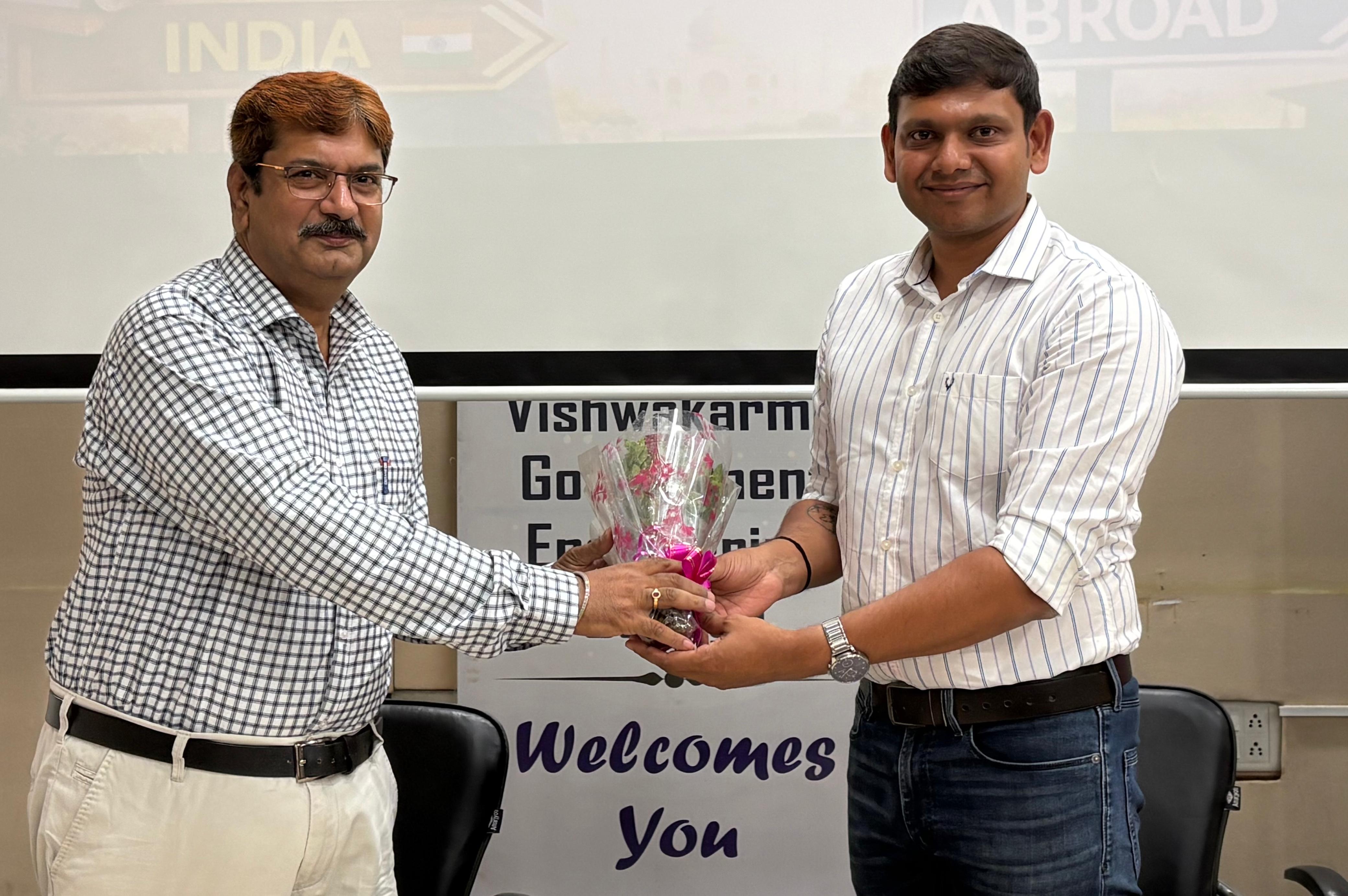
The session, delivered by Sagar Patel, Director of ERFOLG Engineering Services LLP, addressed one of the most common dilemmas faced by students: what next after engineering? He emphasised that while degrees are becoming increasingly common, clarity and direction remain rare—and that timely guidance can significantly change career trajectories.
Opening the discussion, Head of Department Power Electronics, Dr. I. N. Trivedi highlighted a critical gap in the current education system, noting that students spend four years earning degrees but often graduate without the skills required by industry. Dr. V. S. Purani, Principal of VGEC Chandkheda stressed that in today’s competitive world, learning must come from every possible direction beyond classrooms, beyond textbooks and only then can students truly stand out.
Building on this idea, the session presented Germany as a powerful example of how education systems can be aligned with real-world needs. Known for its strong focus on practical learning and industry integration, Germany offers a model where students are trained not just to understand concepts, but to apply them effectively in real scenarios. With most universities being government-funded, students can access world-class education with little to no tuition fees—making it both a smart and accessible choice.
The session also provided clarity on specialised Master’s pathways available in Germany, including Electrical Engineering, Power Engineering, Energy & Power Engineering, Electronics/Power Electronics, and Mechatronics & Embedded Systems helping students align their interests with rapidly evolving industry demands. Leading institutions such as Technical University of Munich, RWTH Aachen University and Karlsruhe Institute of Technology were highlighted as globally recognised centres of excellence offering these programs.
Experts further explained that power electronics is emerging as the backbone of next-generation technologies, playing a crucial role in areas such as electric vehicles, renewable energy systems, smart grids and industrial automation. With strong industry presence, advanced research infrastructure and increasing global demand, these fields offer not just jobs, but long-term, future-proof careers.
One of the most striking insights shared during the session was the financial and career advantage. Students in Germany can work part-time, earning approximately €1,500–€1,800 per month—enough to cover living expenses of €700–€900—making higher education largely self-sustainable. Beyond this, structured pathways allow graduates up to 1.5 years to secure employment, followed by Permanent Residency within 21 months, creating a clear and achievable route towards global career stability.
The session also reinforced a crucial reality: while engineers are produced in large numbers, truly skilled engineers remain limited. Without practical skills, even a strong academic background holds little value in today’s job market. Students were encouraged to begin planning early, maintain a strong academic profile, and focus on building skills that align with industry needs.
As the discussion expanded to a global context, it became evident that the future of engineering lies at the intersection of knowledge, adaptability and practical application. In an increasingly connected world, opportunities are no longer confined by geography but by the willingness to learn and grow beyond boundaries.
The session concluded with an engaging interaction and a powerful takeaway: in today’s competitive landscape, success is not defined by where you study, but by how you learn. And as the session made clear, when learning has no boundaries, careers naturally find their way to global destinations like Germany.