01 April, 2026
When 1% Error in measurement of electrical parameter Can Cost Crores to country: The Value of Precision in Engineering explained by Hiren Vasani , an Expert Speaker from Industry
(Power Electronics Department of VGEC Chandkheda organizing expert talk under industry institute interaction activity)
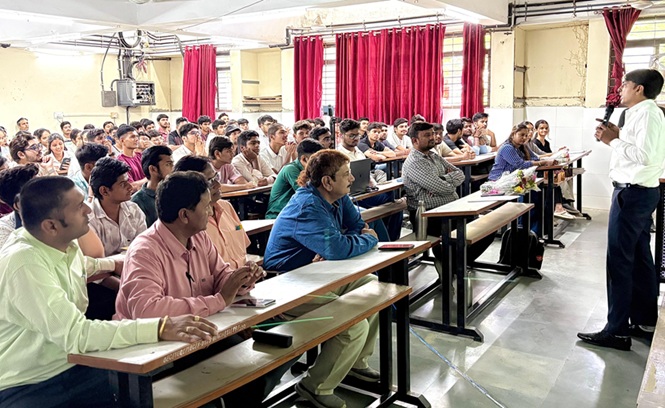
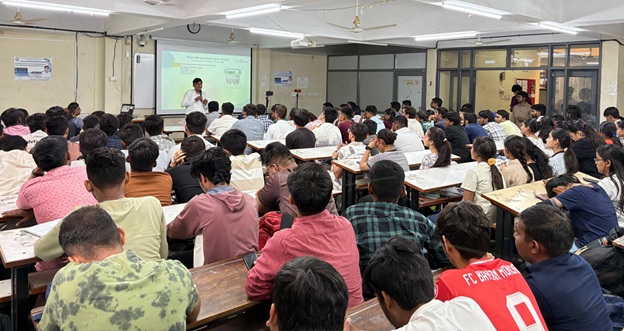
At a time when industries are becoming increasingly dependent on accuracy and data-driven decisions, the importance of precision in engineering is gaining sharper focus. The Power Electronics Department of Vishwakarma Government Engineering College (VGEC), Chandkheda, organised an expert lecture on the “future scope of test and measurement in power electronics” with the kind permission of Visionary leader and patron Dr. V. S. Purani, Principal VGEC Chandkheda and with able guidance of Convener Dr. I. N. Trivedi, HoD, Power Electronics Engineering, highlighting how even the smallest error can lead to significant real-world consequences.
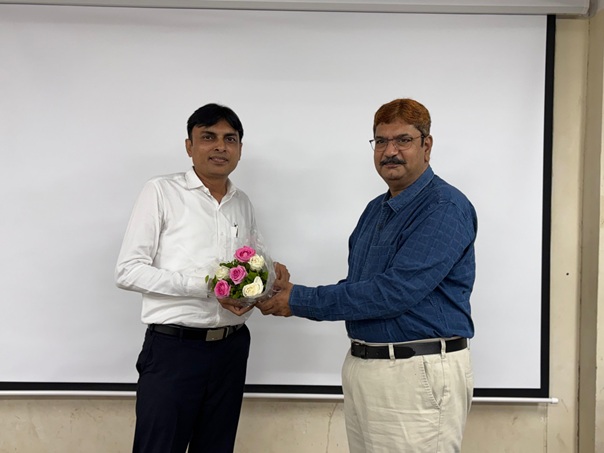
The session was delivered by Er. Hiren R. Vasani, Technical Director at Veer Electronics Pvt. Ltd. and an alumnus of the institute, who brought a strong industry perspective to the discussion. Drawing from real scenarios, he explained how even a one percent error in measurement can result in major financial losses and affect large-scale decision-making. The session effectively demonstrated that precision is not just a technical requirement, but a critical factor in ensuring system reliability, safety and efficiency.
Explaining the fundamentals, the speaker noted that while measurement is the tool, testing is the purpose, and together they define the quality of any engineering system. With industries rapidly shifting towards digital instruments, the demand for higher accuracy and reliability has become essential. He emphasised that even small deviations in data can lead to incorrect planning, performance issues and long-term system failures.
The lecture also highlighted the expanding role of power electronics in modern applications, from energy systems and renewable integration to electric vehicles and industrial automation. Describing it as a bridge between electrical and electronics engineering, the speaker explained how power electronics plays a key role in controlling, converting and optimising electrical energy in today’s world.
Beyond technical aspects, the session focused strongly on engineering mindset and learning approach. Students were advised not to rely completely on artificial intelligence, as it can make errors, and to instead use it as a support tool. The importance of referring to quality research papers was highlighted, as they provide reliable knowledge, exposure to latest technologies and a strong foundation for understanding complex concepts.
Emphasising design thinking, the speaker remarked that a good design engineer continues to think where others stop, and must ensure that systems are built to last for years. He encouraged students to develop a questioning mindset, especially in research roles, and to work consistently on improving their understanding. Strong fundamentals, he noted, remain the most important requirement for success in both industry and placements.
The session also touched upon the importance of standards, certification and proper testing processes in industry, explaining that without certified instruments and validated results, even correct measurements may not be accepted in professional environments.
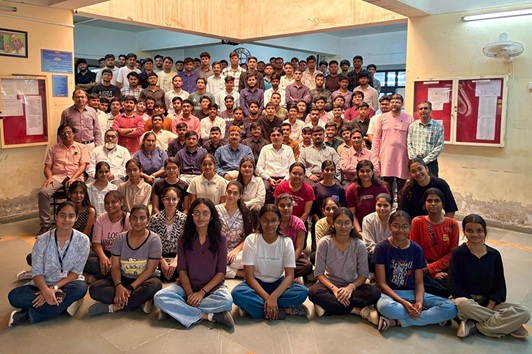
The lecture witnessed active participation, with 147 students and 8 faculty members attending the session and provided valuable insights into the real expectations of the industry. It concluded with a clear and practical message: engineering is not just about knowledge, but about applying that knowledge with precision, responsibility and continuous learning.